
Lansing Property Records Search
Lansing property records are maintained by the Ingham County Register of Deeds in Mason, the county seat. As Michigan's state capital, Lansing has a mix of residential, commercial, and government properties, all with records on file at the Ingham County office. The county's online system provides access to recorded documents, while the City of Lansing Assessor and the BS&A Online portal handle local tax and assessment data. This page covers all the key resources for finding Lansing property records.
Lansing Property Records Overview
Ingham County Register of Deeds
The Ingham County Register of Deeds in Mason is the official keeper of all recorded property documents for Lansing. The office records and indexes deeds, mortgages, land contracts, easements, liens, and other instruments affecting real property in Ingham County under the grantor-grantee system required by MCL 565.29.
Recording costs $30 per document under MCL 600.2567. Copies are $1 per page. Certified copies cost $5 per document. The office is located in Mason, which is about 12 miles south of Lansing.
| Office | Ingham County Register of Deeds |
|---|---|
| Address | 341 S. Jefferson St., Mason, MI 48854 |
| Phone | (517) 676-7216 |
| Website | rd.ingham.org |
| Online Records | Online Records Search |
BS&A Online: Taxes and Assessments
Lansing tax and assessment data is available through BS&A Online for Lansing. No account is required for basic searches. The system covers a wide range of property-related data for Lansing parcels.
The BS&A Online portal for Lansing provides access to: property tax records, assessed values, building permits, utility billing, current and delinquent personal property tax, special assessments, property sale history, and building department records. This is one of the more comprehensive BS&A implementations in Michigan, which makes it a good starting point for most Lansing property research.
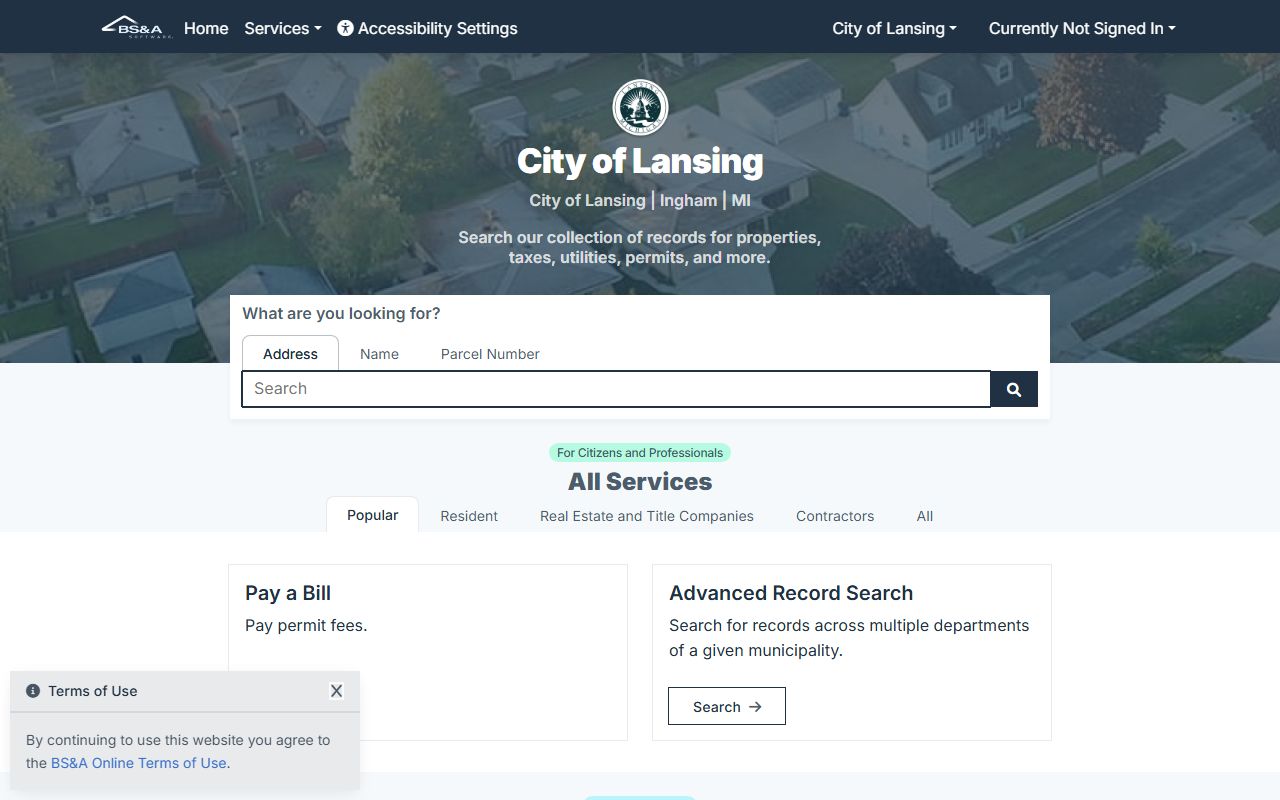
If you're checking on a specific parcel's tax history, recent sales, or permit activity, BS&A is faster than going to multiple separate portals. You can search by address or parcel number.
City of Lansing Assessor
The City of Lansing Assessor's office handles property valuation for all parcels within city limits. Assessment notices go out each year, and property owners can appeal through the Board of Review in March. If you believe your Lansing property is overassessed, that's where the formal review process starts.
All Michigan property is assessed at 50% of true cash value. Annual increases in taxable value are capped under Proposal A at inflation or 5%, whichever is lower. For Lansing properties that have sold recently, the taxable value resets to the current assessed value, which can produce a noticeable change in property taxes for new owners.
City of Lansing Website
The City of Lansing's official website covers all city services, including links to the assessor, city clerk, city treasurer, and permit offices. Lansing is the state capital of Michigan, which means state agency offices and government-related property records are more prevalent here than in most other Michigan cities.
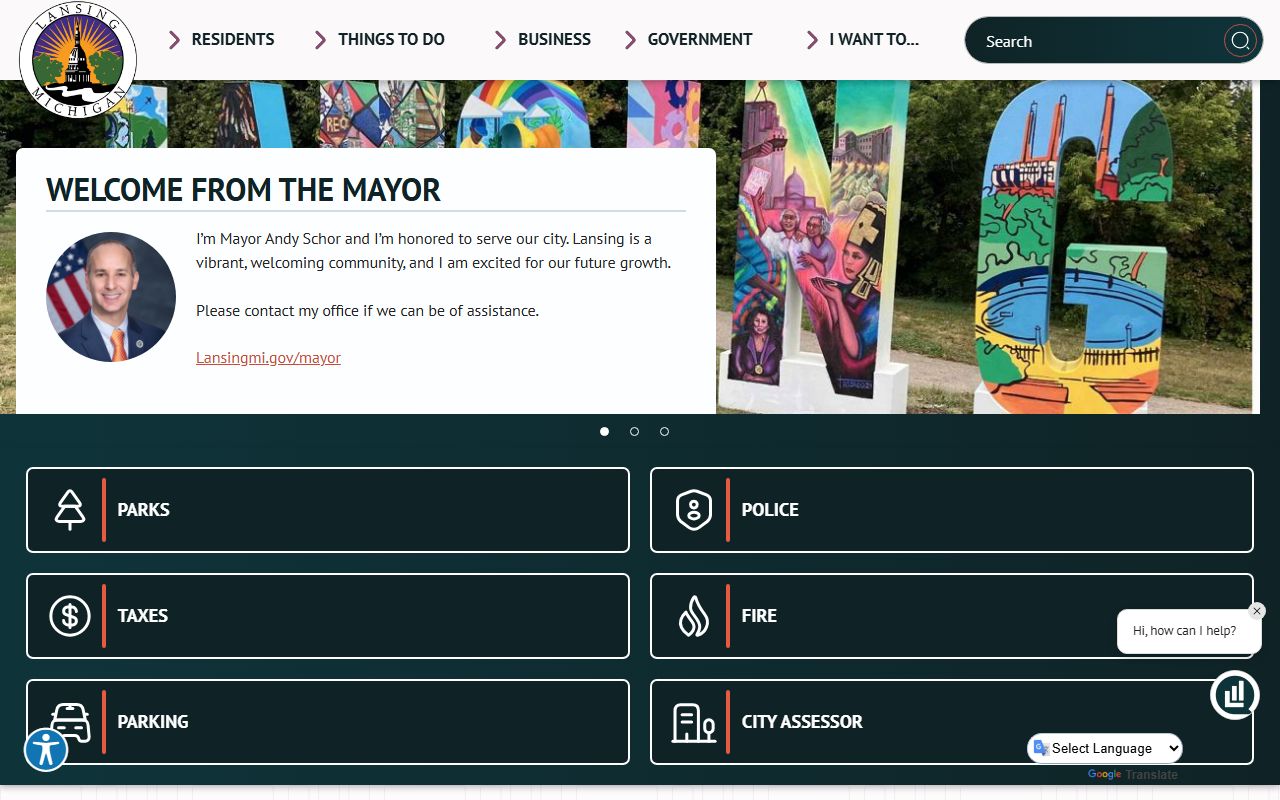
Tax payments for Lansing properties can be made through the city's online portal, by mail, or in person at city offices. The city treasurer's office handles current tax billing, and the Ingham County Treasurer handles delinquent taxes after they are turned over in March following non-payment.
Transfer Taxes and Fees
When a Lansing property sells, Ingham County collects a county transfer tax of $1.10 per $1,000 of sale price at recording. Michigan's state transfer tax adds $7.50 per $1,000. These amounts are typically paid at closing and shown on the closing disclosure. Certain exemptions apply, including some family transfers and principal residence sales that meet specific conditions.
The recorded deed will show the taxable consideration (sale price), which is used to calculate the transfer taxes due. Anyone can check a recorded deed on the Ingham County online system to see what price a property last sold for, which is useful for comparative market analysis.
Michigan Title and Recording Rules
Michigan is a race-notice state. Under MCL 565.29, a buyer who records first without notice of a prior unrecorded claim gets priority. For Lansing buyers, this means recording your deed quickly after closing protects your interest against later claims. An unrecorded deed leaves ownership vulnerable.
Valid deeds must meet the formatting requirements of MCL 565.201, including the grantor and grantee names, a legal description, and a proper acknowledgment. Michigan's Marketable Record Title Act (MCL 565.101) generally clears title defects older than 40 years, which helps simplify title searches on Lansing properties with long ownership histories.
Statewide Research Tools
Several Michigan-wide tools can supplement county and city records for Lansing research.The Michigan Treasury handles the Principal Residence Exemption and other statewide property tax programs. For escrow funds or other property-related amounts that have gone unclaimed, the Michigan Unclaimed Property portal is a useful check.
Nearby Cities
Lansing is the only qualifying city in Ingham County. For property records in neighboring areas, these Michigan cities each have their own pages with local resources and search tools.
Ingham County Property Records
Lansing is located in Ingham County. All property documents for Lansing are recorded at the Ingham County Register of Deeds office in Mason. The county page has full details on the office, recording procedures, online search access, and fees.