
Michigan Property Records
Michigan property records are filed and maintained by the Register of Deeds in each of the state's 83 counties. These records cover deeds, mortgages, liens, land contracts, plat maps, and other documents tied to real estate ownership and transfers. You can search Michigan property records online through county portals, state tools, and subscription platforms. This guide covers where to look, what you'll find, and how to get copies of the documents you need from any county in the state.
Michigan Property Records Overview
Michigan's Register of Deeds System
Michigan uses a county-level system for property records. Each of the 83 counties has its own Register of Deeds office that records, indexes, and stores every document affecting real property in that county. This means there is no single statewide database for all recorded property documents. You look up records in the county where the land sits. That county's office holds the full history of every deed, mortgage, and lien filed there since the county was formed.
The Michigan Department of Treasury provides statewide oversight of certain property programs, including unclaimed property and tax policy, but it does not maintain a central deed database. The State Tax Commission under the Treasury sets assessment standards that all 83 counties follow. Record retention rules come from MCL 399.811, which requires permanent storage for deeds, mortgages, and plat maps. Tax records must be kept for at least seven years. Building permits stay on file for the life of the structure plus ten additional years.
The Treasury homepage is a starting point for state-level resources tied to Michigan property.
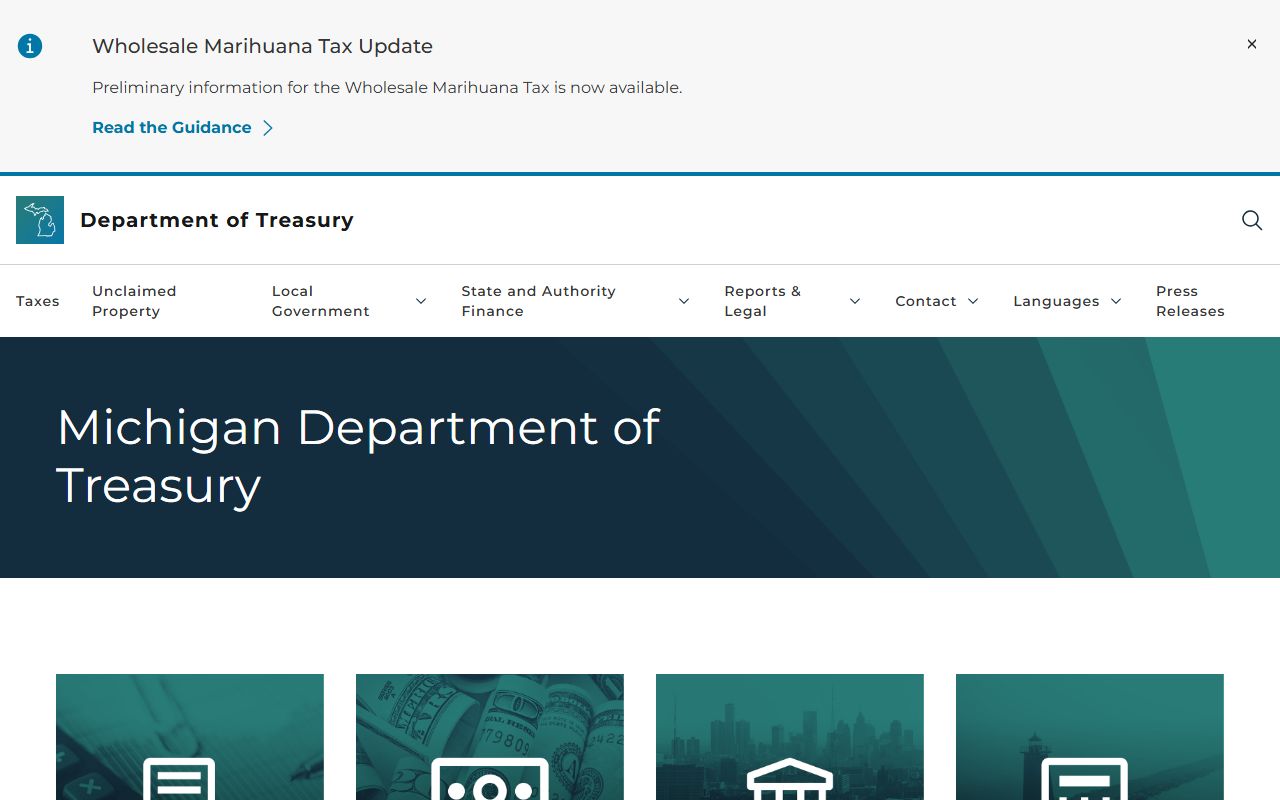
From here you can reach programs covering property taxes, unclaimed assets, and the agencies that work alongside county Register of Deeds offices across Michigan.
All documents recorded with any Michigan Register of Deeds become public record under the Michigan Freedom of Information Act, MCL 15.231 through 15.246. Anyone can request records. You do not need a legal reason, and you do not have to be a party to the transaction. The grantor-grantee index required by MCL 565.28 is the standard way to search recorded documents. It lists the seller (grantor) and buyer (grantee) separately, so you search from both sides when building a full chain of title.
How to Search Michigan Property Records
Searching Michigan property records is done online, in person, or by mail. The right method depends on the county and how far back the records go. Most larger counties now offer online systems. Some require in-person visits for older documents. A few still process all requests by mail or phone.
Online search options vary by county. Many use Tapestry, a fee-based platform that costs $8.75 per search session and $1.00 per page for document images. Laredo is a subscription service used by title companies and real estate attorneys who search frequently. Several counties offer free index lookups through their own websites, where you can see document information without paying for image downloads. Free basic lookups typically show grantor name, grantee name, document type, recording date, and liber and page numbers. You pay only if you need the actual document images.
This type of aggregator is useful for a first pass before drilling into a specific county's own system for document images.
Many county assessors also publish property data through BS&A Online, which covers tax records, assessments, and sale history with no account required. Michigan is a race-notice recording state under MCL 565.29. This means a buyer who records first and had no prior notice of a competing claim wins over someone who had an earlier unrecorded interest. Recording promptly after closing matters here more than in states that use a pure race system.
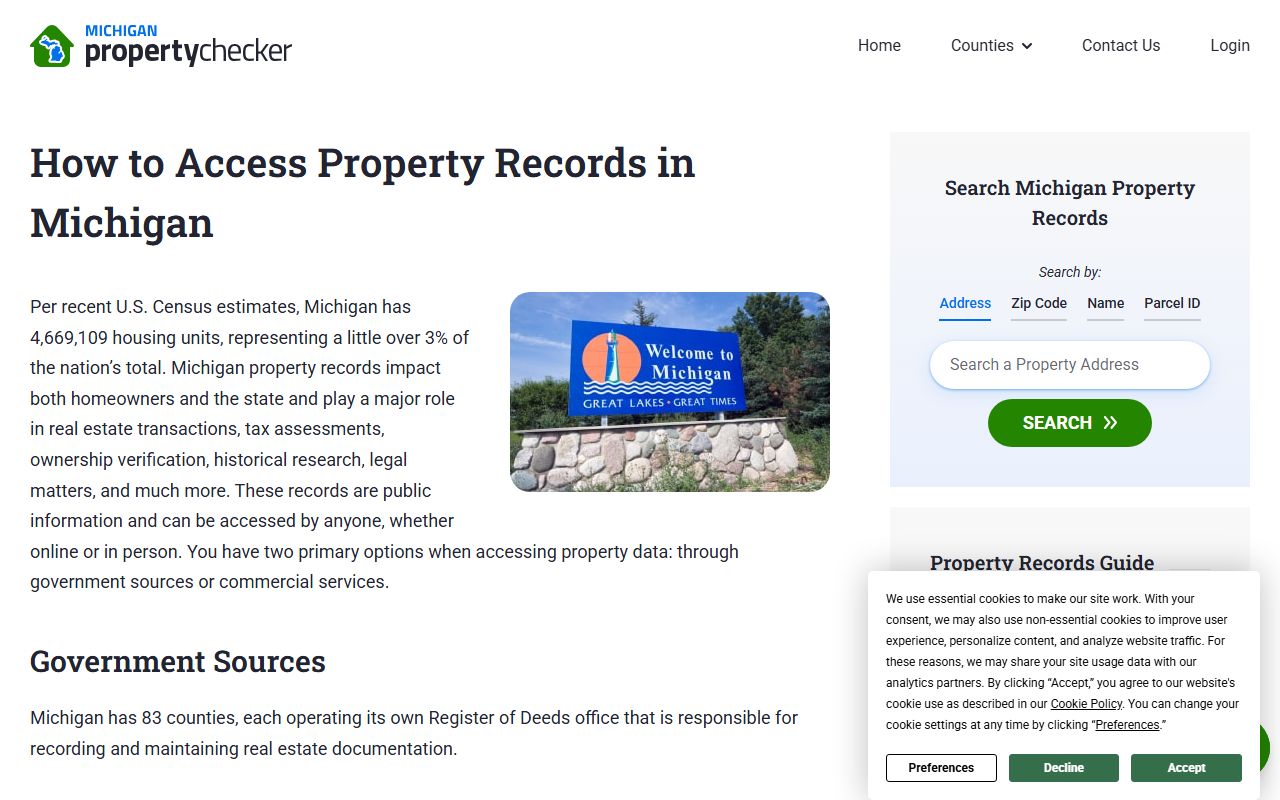
Free tools like this work well for quick ownership checks before moving on to paid platforms for full document access.
Types of Michigan Property Records
Michigan Register of Deeds offices hold a wide range of documents. Knowing what each one does helps you find what you need without wading through records that don't apply.
Warranty deeds are the most common type of deed. The seller guarantees clear title. Quitclaim deeds transfer whatever interest the grantor holds, with no guarantees at all. Special warranty deeds fall in between, offering a limited title guarantee covering only the seller's period of ownership. Land contracts are seller-financed purchase agreements where the buyer takes possession but legal title stays with the seller until the full purchase price is paid. When a loan is repaid, the lender records a mortgage discharge under MCL 565.41 to clear the lien from the record.
Liens show up in several forms. Mechanic's liens protect contractors and suppliers who don't get paid for work or materials. Tax liens appear when property taxes go delinquent. Judgment liens attach to property when a court award goes unpaid. A lis pendens puts the public on notice that litigation is pending against a property. Easements give one party the right to use another's land for a specific purpose, such as a driveway or utility line. Restrictive covenants limit how property can be used and run with the land indefinitely unless removed by court order.
Common document types found in Michigan property records include:
- Warranty, quitclaim, and special warranty deeds
- Land contracts and land contract memorandums
- Mortgages, assignments, and discharges
- Mechanic's, tax, and judgment liens
- Lis pendens filings and court orders
- Easements and restrictive covenants
- Plat maps, surveys, and subdivision plans
Plat maps are recorded by developers when subdivisions are created. They show lot layouts, street names, and dimensions. Surveys describe exact boundary lines. Both are permanent records at the county level and come up frequently in title searches and boundary disputes.
Michigan Property Tax Records and Assessments
Property tax records in Michigan are managed through a three-tier system. Local assessors in cities and townships set initial values. County Equalization Departments review and adjust those values each spring. The Michigan State Tax Commission provides oversight and hears appeals from county boards of review.
Michigan property is assessed at 50% of its true cash value. That figure is the Assessed Value, or AV. The State Equalized Value, or SEV, is the AV after county and state review. The Taxable Value is what drives your actual tax bill. Under Proposal A, passed in 1994, taxable value can only rise by the rate of inflation or 5%, whichever is lower, until a property changes hands. When a sale occurs, taxable value uncaps and resets to the SEV. Long-time owners often pay much less than new buyers on the same block because their taxable values are capped at lower historical numbers. Buyers should factor in this reset when calculating what they'll owe after closing.
The State Tax Commission site covers how assessments work, how mill rates are set, and how to appeal across all 83 Michigan counties.
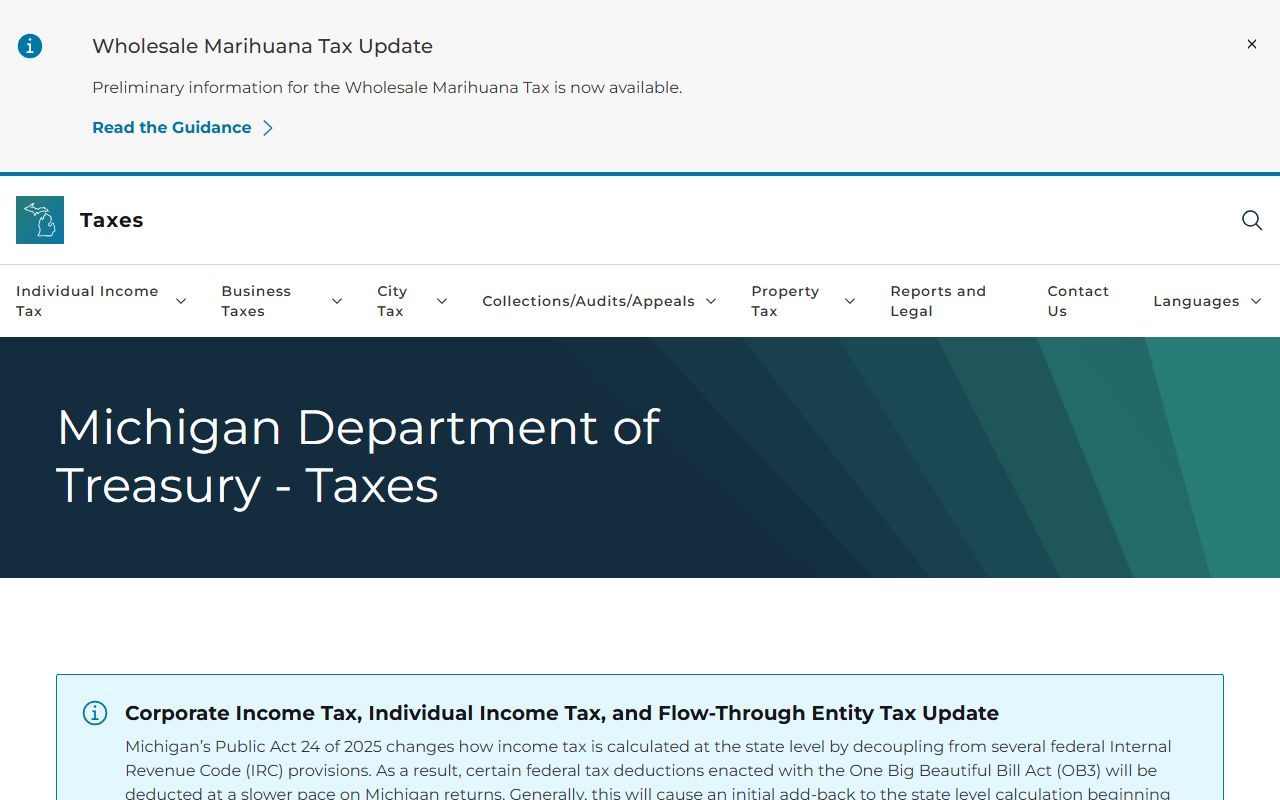
Use the commission's resources to understand how your property is valued, what the appeal process looks like, and when deadlines fall.
Tax bills come in two rounds each year. Summer bills go out July 1. Winter bills go out December 1. Assessment notices arrive in March. The March Board of Review is your first and best chance to dispute a new or changed assessment. Missing it limits your options for the rest of the year. Transfer taxes are due at recording: the county transfer tax runs $1.10 per thousand dollars of value, and the state transfer tax adds another $7.50 per thousand.
Note: When a Michigan property sells, its taxable value uncaps and resets to the State Equalized Value, which can significantly increase property taxes for the new owner in the first year.
Michigan Unclaimed Property Records
Michigan currently holds roughly $2 billion in unclaimed property for current and former residents. This comes from dormant bank accounts, uncashed checks, stock dividends, insurance payments, and safe deposit box contents. The Michigan Department of Treasury takes custody after a dormancy period ends, typically three years for most asset types and one year for payroll checks. About 26 million individual property items are in the state's possession. The average payout per successful claim runs around $2,500.
Searching is free. The online portal at Michigan Unclaimed Property lets anyone search by name or business name. Claims over $50 can be filed directly through the portal. There is no deadline. The right to unclaimed property in Michigan does not expire. Contact the Treasury's claims division at 517-636-5320 with questions about specific items or claim status.
The Michigan unclaimed property portal is where searches and claims both start, at no cost to the claimant.
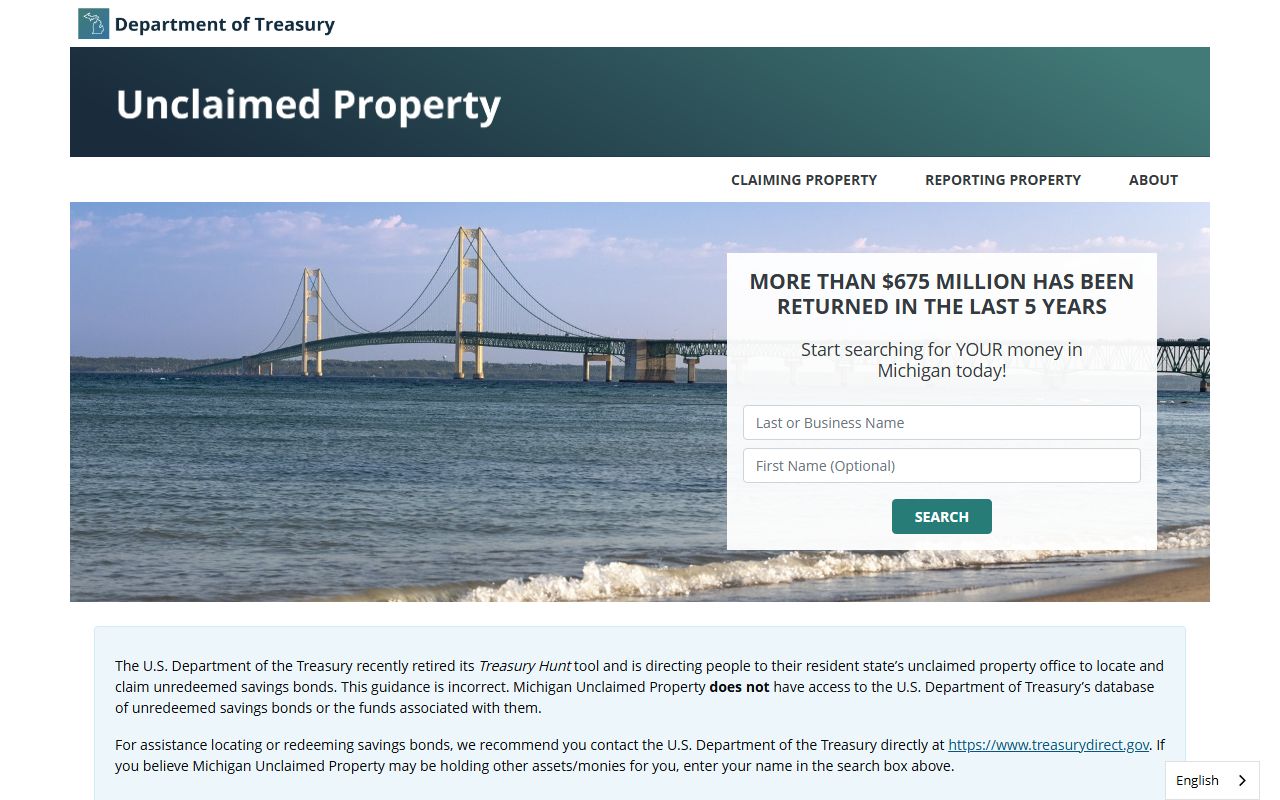
Any Michigan resident or former resident can use this search at no cost to check whether the state is holding money or property in their name.
The Unclaimed Property FAQ from the Michigan Treasury covers what qualifies, how long the dormancy period runs for different asset types, and what documents to provide when filing. Businesses that hold dormant accounts have their own reporting obligations under state law. The reporting guidelines explain what businesses must submit and when.
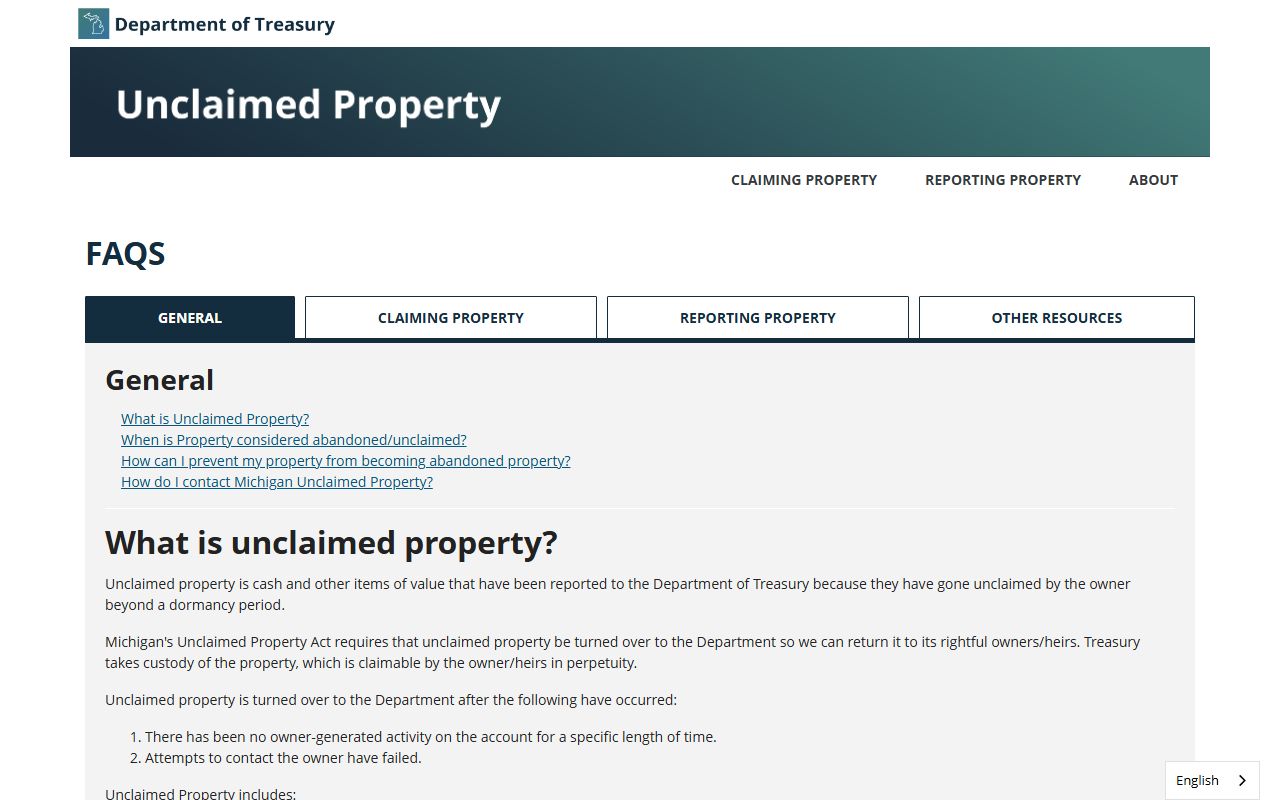
The FAQ is worth reading before filing a claim, since it covers what documentation you'll need to prove your identity and right to the property.
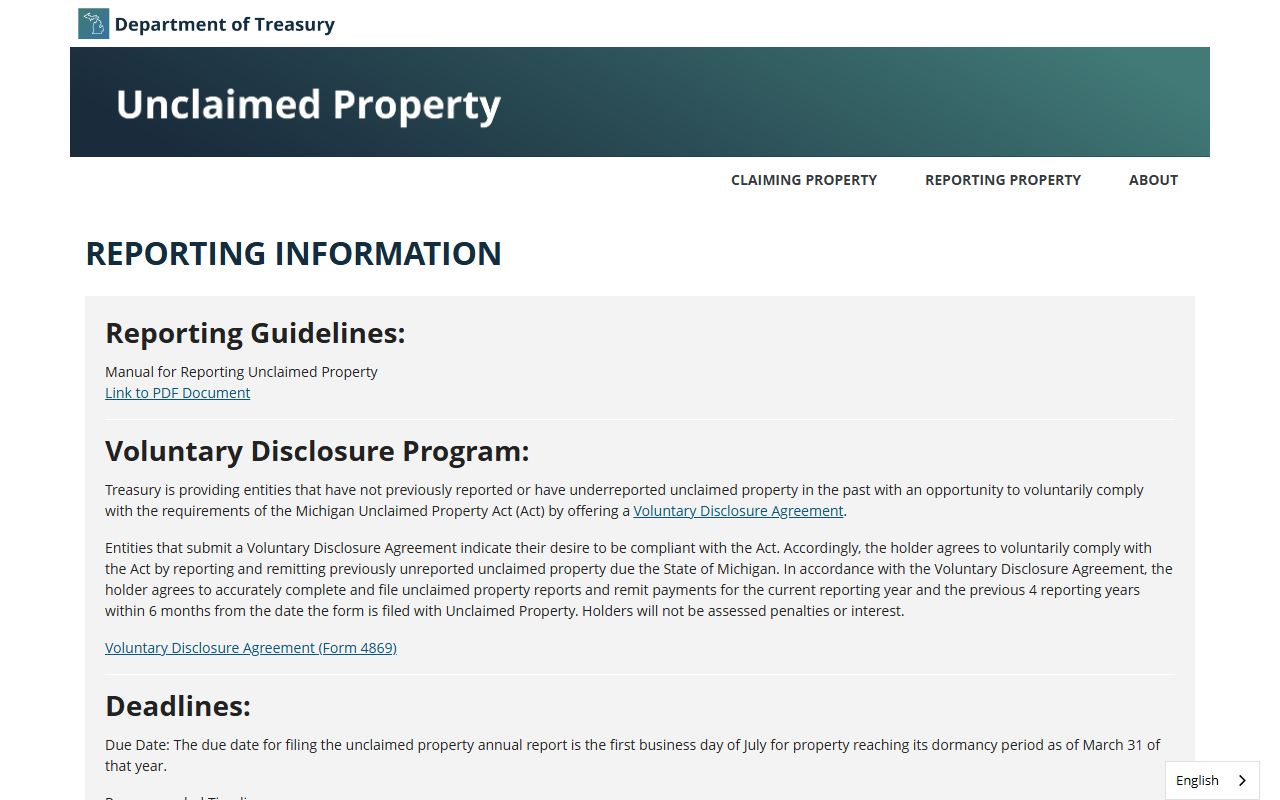
Businesses use these reporting guidelines to comply with state law each year when turning over dormant assets to the Treasury.
UCC Filings and Michigan LARA
The Michigan Department of Licensing and Regulatory Affairs, or LARA, runs the centralized UCC filing system for the state. UCC financing statements cover security interests in personal property. When personal property is attached to real estate as a fixture, the lender files at the county Register of Deeds, not LARA. This distinction matters in title searches. A complete search for liens on a property may require checking both LARA's UCC database and the county deed records.
LARA's UCC Section handles searches and filings for statewide security interests. You can reach them at 517-322-1144. UCC forms are available through the Michigan Secretary of State's website under business services. For fixture filings specifically, the filing goes to the county where the property sits, just like any other deed or mortgage. Confusing these two filing locations is a common error that can leave a lender's interest unprotected.
LARA handles statewide UCC searches that cover personal property security interests not recorded at the county level.
The UCC information page explains what gets filed at the state level versus the county, and how to search both systems when doing a complete lien search on a property.
Michigan Property Recording Requirements and Fees
MCL 565.201 sets the baseline requirements for any document recorded with a Michigan Register of Deeds. Every document must meet specific formatting standards or it will be rejected or recorded as non-standard with a penalty fee added to the standard charge. The first page must have a top margin of at least 2.5 inches. All other margins must be at least half an inch. Paper must be 8.5 by 11 inches minimum, on 20-pound white stock. Ink must be black. Font must be at least 10-point. Names must appear printed or typed beneath all original signatures. Only one recordable event is allowed per document, and the single recordable event statement must appear on the first line of the document.
Under MCL 565.201a, the name and address of the person who prepared the document must appear on it. MCL 565.221 requires that documents conveying or mortgaging real estate state the marital status of any male grantor. Property tax ID numbers must appear on the first page of any deed. The total value of the property must be stated, or a Real Estate Valuation Affidavit must be attached. These requirements apply uniformly across all 83 counties.
The Michigan Compiled Laws database is where you can look up any of these recording statutes in full, without a subscription.
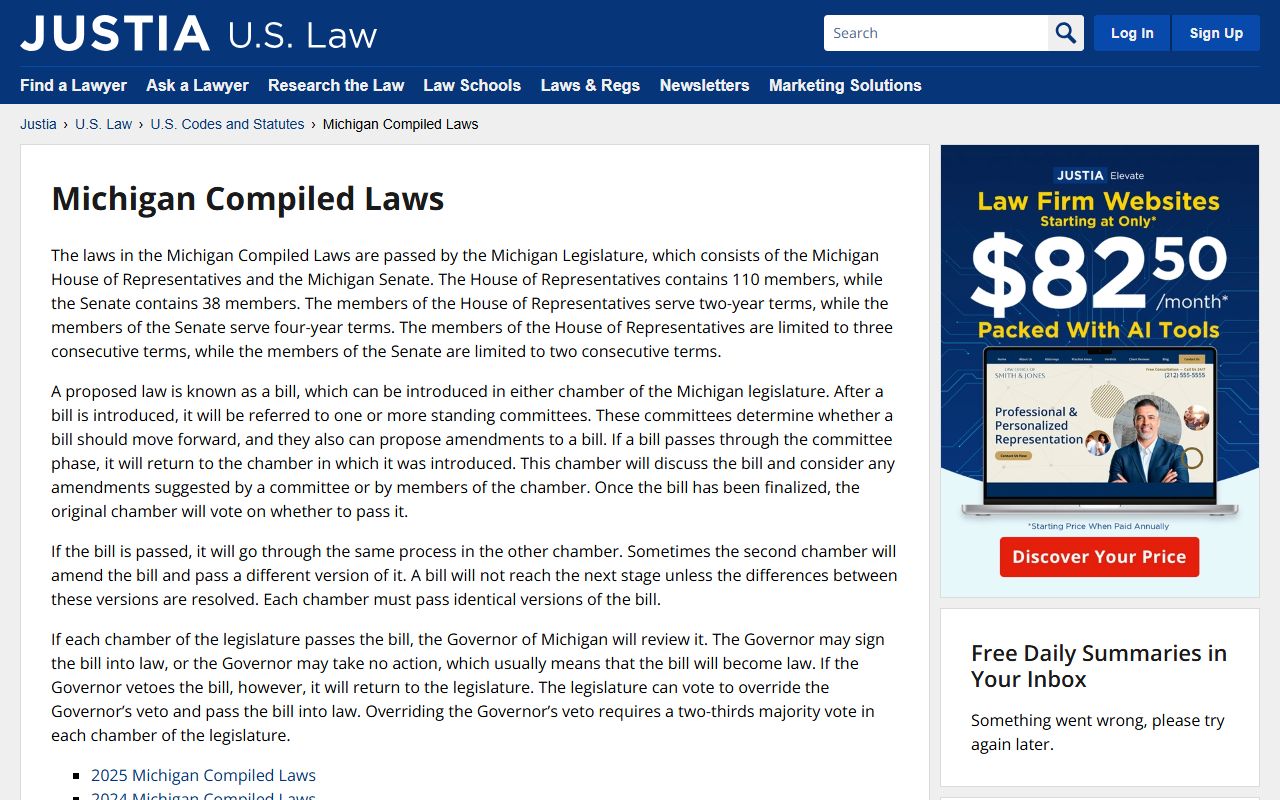
Justia's Michigan law pages let you read any MCL section online for free, which is useful when preparing documents or checking compliance before recording.
Standard recording fees were set statewide effective October 1, 2016 under MCL 600.2567. The flat fee is $30 per document, regardless of page count. Each instrument assigned or discharged in the same document adds $3. Certified copies cost $5 per document. Plain copies cost $1 per page. Tax certification on a deed runs $5 for up to 25 parcels, and $0.20 for each additional parcel. The Marketable Record Title Act, MCL 565.101, clears title of ancient defects after 40 years of unbroken chain for land interests and 20 years for mineral interests. This matters for rural properties with old or irregular deed histories.
Note: Documents that do not meet MCL 565.201 formatting standards may be accepted as non-standard, but a $25 penalty fee is added on top of the regular recording charge.
Browse Michigan Property Records by County
Each of Michigan's 83 counties has its own Register of Deeds office that stores and indexes property records for that area. Pick a county below to find local contact information, online search options, office hours, and recording fee details specific to that location.
Michigan Property Records by City
Residents of Michigan's major cities access property records through their county Register of Deeds. Pick a city below to find resources, office contact details, and search tools specific to that area.