
Find Property Records in Cass County
Cass County property records are kept by the Register of Deeds office in Cassopolis, the county seat. The office records and indexes all instruments that affect real property within the county, including warranty deeds, quitclaim deeds, mortgages, liens, and easements. Online document search is available for many records, with document images accessible through the county's system. You can also visit the office in person or submit a written request by mail to obtain copies of Cass County property records.
Cass County Property Records Overview
Cass County Register of Deeds Office
The Register of Deeds is located at 120 N. Broadway in Cassopolis. The main phone number is (269) 445-8644 and the fax is (269) 445-8645. This office accepts documents for recording, maintains the public index, and provides copies to anyone who requests them. It is the official keeper of Cass County land records.
The office maintains a grantor-grantee index as required by MCL 565.28. This index lets you search by the name of the person who sold or transferred property (grantor) or the person who received it (grantee). Most searches start with one of these names and a date range. Once you find a document in the index, you can request a copy or pull up the image online.
Cass County Property Records Online Search
Cass County offers online access to its property record index. Document images are available for many instruments. This means you can search from home, find the record you need, and view or download the image without visiting the office. The online system is useful for recent deeds, mortgage releases, and liens.
For older records, the office may not have digital images available. In those cases, a mail request or in-person visit is necessary. When requesting copies by mail, include the party names, approximate recording date, and document type. A check for the applicable fees should be enclosed. The office will search and return what it finds.
It is useful for getting a quick look at a property's ownership history and assessed value before diving into the Register of Deeds records.
Note: Online document images in Cass County are available for many instruments, but some older records require an in-person visit to the Cassopolis office to view the original document.
How to Record Documents in Cass County
Recording a property document in Cass County requires meeting the formatting standards set by MCL 565.201. Every document must be on 8.5" x 11" white paper, at least 20 lb weight, with black ink throughout. The first page needs a 2.5-inch top margin. All other margins must be at least 0.5 inches. Font size must be 10 points or larger. Printed names below each signature are required.
Each document can cover only one recordable event. If you need to record multiple transactions, prepare separate documents for each. The drafter's name and address must appear on every document under MCL 565.201a. Title companies and attorneys routinely include this information, but individuals preparing their own documents sometimes overlook it.
The recording fee is $30. Additional instruments assigned or discharged within the same document cost $3 each. Documents that do not meet the formatting requirements face a $25 non-standard penalty fee. It's worth checking the requirements before submitting to avoid the penalty and potential return of the document.
Transfer taxes are due at recording. Cass County collects $1.10 per $1,000 of the sale price as the county transfer tax. The state of Michigan adds $7.50 per $1,000. Both are paid at the Register of Deeds when the deed is recorded.
Property Law Basics for Cass County
Michigan operates as a race-notice state under MCL 565.29. The rule is straightforward. The first party to record a deed or other instrument, without prior notice of an existing claim, holds priority. If you buy land in Cass County, recording your deed promptly protects you against later claims from other buyers or creditors.
The Marketable Record Title Act, found at MCL 565.101, helps resolve old title defects. After 40 years, most clouds on title are extinguished by operation of law. For mineral rights, the period is shorter at 20 years. This act is particularly useful in Cass County, where some rural parcels have complex ownership histories going back to 19th century land grants.
Assessment rules in Michigan tie taxable value to 50% of true cash value. Under Proposal A, taxable value grows only by inflation or 5% per year, whichever is less. When a property sells, taxable value uncaps and resets to the assessed value. This can mean a significant jump in taxes for a new buyer, so checking current taxable and assessed values before purchase is important.
It is a useful starting point for research but does not replace the official records at the Register of Deeds.
Note: The Marketable Record Title Act at MCL 565.101 can clear defects in older Cass County land titles, but it does not eliminate all types of encumbrances. A title search and title insurance are still recommended for any purchase.
Cass County Property Taxes
Property taxes in Cass County are administered by township and city treasurers, with oversight from the county treasurer. The county equalization department conducts annual equalization to ensure that all assessments meet the 50% true cash value standard set by state law. Cass County has a mix of agricultural land, wooded parcels, and lakefront properties, each assessed differently based on use and market value.
Tax status is not part of the deed index at the Register of Deeds. To check whether taxes are current, contact the local township or city treasurer for the parcel's location. The county treasurer handles delinquent taxes after local treasurers turn them over. Delinquent tax liens that get formally recorded will appear in the Register of Deeds index.
The Michigan State Tax Commission sets the rules that local assessors follow. Appeals of assessments go first to the local board of review, then to the Michigan Tax Tribunal if unresolved. Knowing the appeal process can help property owners who believe their assessments are too high.
The Michigan State Tax Commission site provides resources for all Michigan counties including Cass County assessments.
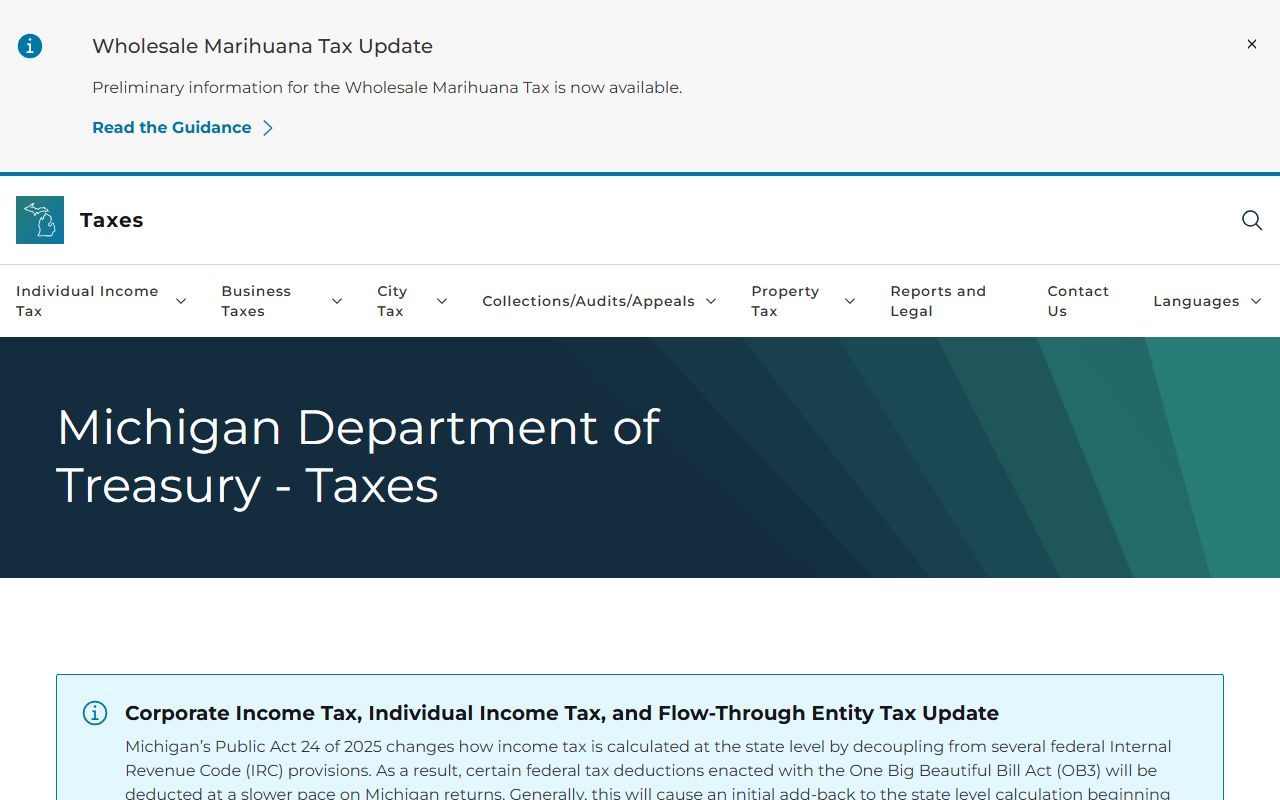
Check the Tax Commission portal for guidance on property valuation rules and appeal procedures.
Additional Cass County Property Record Sources
Several sources beyond the Register of Deeds hold information relevant to Cass County property research. The county probate court has records of estates that involved real property, including deeds recorded as part of a probate proceeding. The circuit court handles foreclosure actions and judgments that can create liens on property.
UCC fixture filings tied to specific parcels in Cass County are filed with the Register of Deeds. These show up in the grantor-grantee index and affect title. For statewide UCC searches not tied to a specific parcel, use Michigan LARA at 517-322-1144.
The Michigan Department of Treasury has guidance on property tax exemptions, unclaimed property, and other financial matters that touch on real estate. For unclaimed property tied to a parcel or former owner, Michigan Unclaimed Property at 517-636-5320 can help locate funds.
Document retention rules under MCL 399.811 require permanent storage of deeds, mortgages, and plats. This means Cass County property records going back to the county's earliest years are still available for research at the Register of Deeds office.
Cities in Cass County
No cities in Cass County meet the population threshold for a dedicated city page on this site. Cassopolis serves as the county seat. Dowagiac is the largest city in the county.
Nearby Counties
Cass County borders four Michigan counties. Each maintains its own Register of Deeds with separate land records.