
Marquette County Property Records
Marquette County property records are maintained by the Register of Deeds in Marquette, the county seat of Michigan's largest county by land area. Located in the Upper Peninsula, Marquette County encompasses a vast stretch of land ranging from Lake Superior shoreline to deep inland forest. The Register of Deeds records and indexes all real property instruments including deeds, mortgages, liens, easements, and plats. You can search these records in person, by mail, or through online tools that index Michigan county property data.
Marquette County Property Records Overview
Marquette County Register of Deeds
The Register of Deeds office is at 234 W. Baraga Ave. in Marquette. Phone: (906) 225-8415. Fax: (906) 225-8419. This is the official custodian of all recorded real property instruments in Marquette County. The grantor-grantee index required by MCL 565.28 is kept here, organized so that any recorded instrument can be found by searching either the grantor or grantee name. Documents presented for recording must comply with the formatting rules of MCL 565.201.
Marquette County is the largest county in Michigan by area and one of the most geographically diverse. Its property records reflect a wide range of land types: residential and commercial parcels in Marquette city, extensive timber and mineral rights tracts, recreational land, and waterfront properties along Lake Superior. Mining rights and timber rights can complicate title searches here more than in many other Michigan counties, so thorough research is important.
Searching Marquette County Property Records
In-person searches at the W. Baraga Ave. office give you direct access to the index and document files. Public terminals are available during office hours. Staff can help you navigate the system. For complex searches involving old mining or timber rights records, a professional title abstractor with Upper Peninsula experience may be the most efficient choice.
Mail requests are a practical option for many users. Write to the Register of Deeds with the party names, approximate date range, and document type. Send payment for the search and copy fees. The office will search the index and return copies. Clear and complete requests get faster responses. Include a self-addressed stamped envelope.
Online tools can help you start a search before visiting or writing.Either can help you identify parcel numbers and current owners before running a formal deed search.
One note specific to Marquette County: because the county is so large and has such a varied land base, records for some remote parcels may have gaps or inconsistencies in older pre-digital indexes. If you are doing due diligence on a remote parcel with a long history, allow extra time and consider working with someone who knows the county record system well.
Marquette County mineral and timber rights may be held separately from surface rights. A complete title search must examine whether the deed chain conveys surface rights only or also includes subsurface mineral rights. Check for any separate mineral deed or timber deed in the index.
Types of Instruments Recorded
Warranty deeds and quitclaim deeds make up the bulk of conveyance instruments. Warranty deeds include a guarantee from the seller that title is clear back through the chain of ownership. Quitclaim deeds pass only what the grantor holds, with no warranty. Land contracts, which allow a buyer to pay the purchase price over time while the seller retains title, are also common and are recorded here.
Mortgages, assignments, and discharges reflect lending and loan payoff activity. Tax liens, both state and federal, are indexed here and can attach to all real property in the county. Mechanic's liens protect contractors and subcontractors who work on Marquette County properties. Judgment liens from court actions can also become liens on real property.
Easements are especially important in a county with extensive utility infrastructure, timber access roads, and public land adjacencies. Conservation easements protecting Upper Peninsula land from development are increasingly common. Plats subdivide land into lots and must be recorded before individual lots can be conveyed. All of these instrument types are indexed in the grantor-grantee system at the Register of Deeds.
Recording Requirements and Transfer Tax
All instruments submitted for recording must meet the standards of MCL 565.201. The first page must have a 2.5-inch clear top margin. All other margins must be at least 0.5 inches. Each document should contain a single recordable event. Text must be legible and print quality must support imaging. Non-conforming documents may be rejected.
The recording fee under MCL 600.2567 is $30 per document. Each additional assigned or discharged instrument within the document adds $3. This flat fee applies uniformly across all Michigan counties.
Transfer taxes apply to all conveyances for value. The county rate is $1.10 per $1,000 of value transferred. The state rate is $7.50 per $1,000. Both are due at recording and must be paid by the seller in most transactions. A transfer tax affidavit must accompany the deed. Exemptions exist for transfers between family members and certain court-ordered conveyances. The specific exemption categories are defined in the state enabling statute.
Michigan's Marketable Record Title Act (MCL 565.101) provides that a 40-year chain of record title generally clears prior defects that are not preserved in the record during that period. For Marquette County parcels with long histories, this act simplifies title searches in many cases.
Michigan Department of Treasury and Property Assessment
The Michigan Department of Treasury provides a central resource for property tax information, the Principal Residence Exemption, and assessment rules that apply statewide.
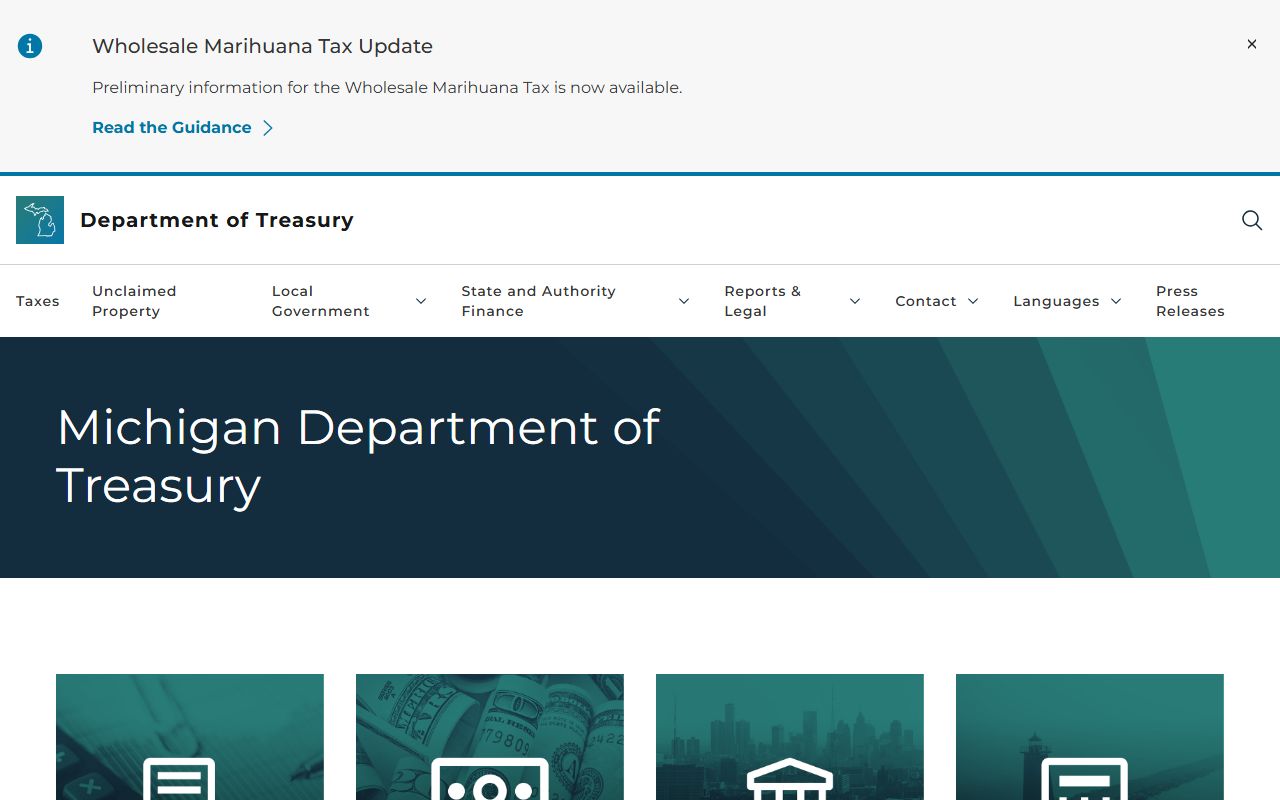
The Treasury site explains how taxable value is calculated under Proposal A, how the uncapping works on a sale, and what exemptions are available to Marquette County property owners including the Principal Residence Exemption and the Qualified Agricultural Property exemption.
For Marquette County, property is assessed at 50% of its true cash value. Taxable value is capped at 5% or the inflation rate annual increase until a sale, at which point it uncaps to the state equalized value. The equalization department at the county level handles assessment appeals first; state-level disputes go to the Michigan Tax Tribunal. The Michigan Unclaimed Property portal can also be checked for any unclaimed funds tied to prior property owners or old escrow accounts.
Race-Notice Recording and Priority
Michigan is a race-notice state under MCL 565.29. A buyer who records first and has no notice of a prior unrecorded interest generally prevails in any priority dispute. This rule makes recording promptly after closing essential for protecting your Marquette County purchase.
An unrecorded deed is binding between the parties but not against a subsequent bona fide purchaser who records first. The gap between closing and recording is a window of risk. In most Marquette County transactions, the deed is recorded within days of closing to close that gap. The recording timestamp is permanent and public, establishing the order of priority for any competing interests in the property.
The full text of Michigan's recording laws and the Marketable Record Title Act is available for free at the Michigan Compiled Laws database through Justia. This is the best place to verify the exact statutory language before relying on any recording or title rule for Marquette County property transactions.
Cities in Marquette County
Marquette County has no cities that meet the population threshold for individual city pages. The city of Marquette is the county seat and largest community, serving as the commercial and governmental center of the Upper Peninsula. All property records for the county are filed at the Register of Deeds on W. Baraga Ave. regardless of whether the parcel is in the city or in one of the surrounding townships.
Nearby Counties
Marquette County borders several other Upper Peninsula counties. Each county has its own Register of Deeds handling property records for that area.