
Calhoun County Property Records
Calhoun County property records are filed and maintained by the Register of Deeds office in Marshall, Michigan. Anyone can search these records to find deeds, mortgages, liens, and other land documents tied to real property in the county. The office handles recording, indexing, and public access for all instruments that affect title to land in Calhoun County. Whether you need to look up a recent sale, check for liens, or trace ownership over time, the Register of Deeds is your primary source for official property records.
Calhoun County Property Records Overview
Calhoun County Register of Deeds
The Register of Deeds office sits at 315 W. Green St. in Marshall. You can reach them by phone at (269) 781-0716. This is where all property documents get recorded and stored. The office maintains the official index of grantors and grantees going back well over a century, giving researchers a complete picture of land ownership in Calhoun County.
To record a document, bring it to the office in person or send it by mail. The office will check that it meets state formatting standards before accepting it. Staff can assist with basic questions about how to find records, but they cannot give legal advice. If you need help understanding what a document means, a title company or real estate attorney can help.
The Calhoun County recording requirements page lists what the office needs from you before it will accept a document. Review this before you bring anything in to record. It saves time and helps avoid the $25 non-standard document penalty.
Search Calhoun County Property Records
You have three main ways to search Calhoun County property records. The first is in person at the Register of Deeds office in Marshall. Staff can walk you through the index and help you pull documents. This works well if you need to review original paper records or need certified copies right away.
The second option is mail. Send a written request with the party names, approximate dates, and a check for the copy fees. The office will search the index and mail back what it finds. Allow extra time for this method. Third, the county offers an online index that lets you search by name or document type from any computer. Document images may be available for recent records. For older records, you may still need to visit in person or request copies by mail.
These sources pull assessment data separate from the deed records at the Register of Deeds.
Note: The online index shows document details and parties, but not all older document images are digitized. For records before the mid-1990s, plan to visit the office or request copies by mail.
Recording Documents in Calhoun County
Michigan law sets strict formatting rules for recorded documents. Under MCL 565.201, every instrument must use 8.5" x 11" white paper, weigh at least 20 lbs, use black ink, and maintain a 2.5-inch top margin on the first page. Font size must be at least 10 points. Printed names must appear below each signature. The document must cover only one recordable event.
Beyond formatting, Calhoun County requires a property valuation affidavit on most transfers. Warranty deeds need a tax certification showing no outstanding taxes are owed on the parcel. These are state requirements that apply across all Michigan counties, but the Register of Deeds here enforces them on every document it receives.
The recording fee is $30 per document. If the document assigns or discharges additional instruments, add $3 for each one. Copies cost $1 per page. Certified copies are $5 per document. Documents that do not meet the MCL 565.201 standards get a $25 penalty fee added to the recording cost.
MCL 565.201a requires that the drafter's name and address appear on every recorded document. This rule applies to attorneys, title companies, and individuals alike. If this line is missing, the office will return the document unrecorded.
Note: Transfer taxes apply to most conveyances. The county rate is $1.10 per $1,000 of the sale price. The state adds $7.50 per $1,000 on top of that, paid at the time of recording.
Michigan Property Law and Calhoun County Records
Michigan is a race-notice state under MCL 565.29. That means the first party to record a document, without prior knowledge of another claim, wins the priority dispute. Recording quickly matters. If you buy land in Calhoun County and wait to record, a later buyer who records first and had no knowledge of your purchase could take priority.
The Marketable Record Title Act at MCL 565.101 lets owners clear old title defects after 40 years. For mineral rights, that period drops to 20 years. This law helps resolve gaps and clouds in Calhoun County land titles without going to court in many cases. Title insurance companies rely heavily on this act when writing policies for older parcels.
Assessments in Michigan run at 50% of true cash value. Proposal A caps annual increases in taxable value at the rate of inflation or 5%, whichever is less, until the property sells. At sale, taxable value resets to the assessed value. This structure affects what buyers pay in taxes after a transfer and shows up in the county's assessment records.
It does not replace the official Register of Deeds records, but it can help you identify which documents to request.
Calhoun County Property Taxes and Assessments
Property tax records for Calhoun County are separate from the deed records at the Register of Deeds. The county treasurer and local township or city assessors handle tax billing and collection. You can look up tax status online through the county's equalization department or the township office for the parcel in question.
The Michigan State Tax Commission oversees assessment practices statewide. County equalization departments work under these rules to ensure local assessors follow the 50% true cash value standard. Calhoun County has a mix of urban and rural parcels, and assessment values vary significantly across the county's cities and townships.
Unpaid property taxes create a lien on the property that shows up in the Register of Deeds records once the county treasurer files a certificate. A search of the deed index should reveal any tax liens that have been formally recorded. Always check both the deed index and the treasurer's records before closing on a property purchase.
The Michigan Department of Treasury provides guidance on property tax appeals and exemptions. Homestead exemptions, poverty exemptions, and agricultural exemptions all affect taxable value. A buyer taking over a property with an exemption in place should verify that the exemption will continue or needs to be re-applied for.
The Michigan Treasury screenshot below shows the state's property tax portal.
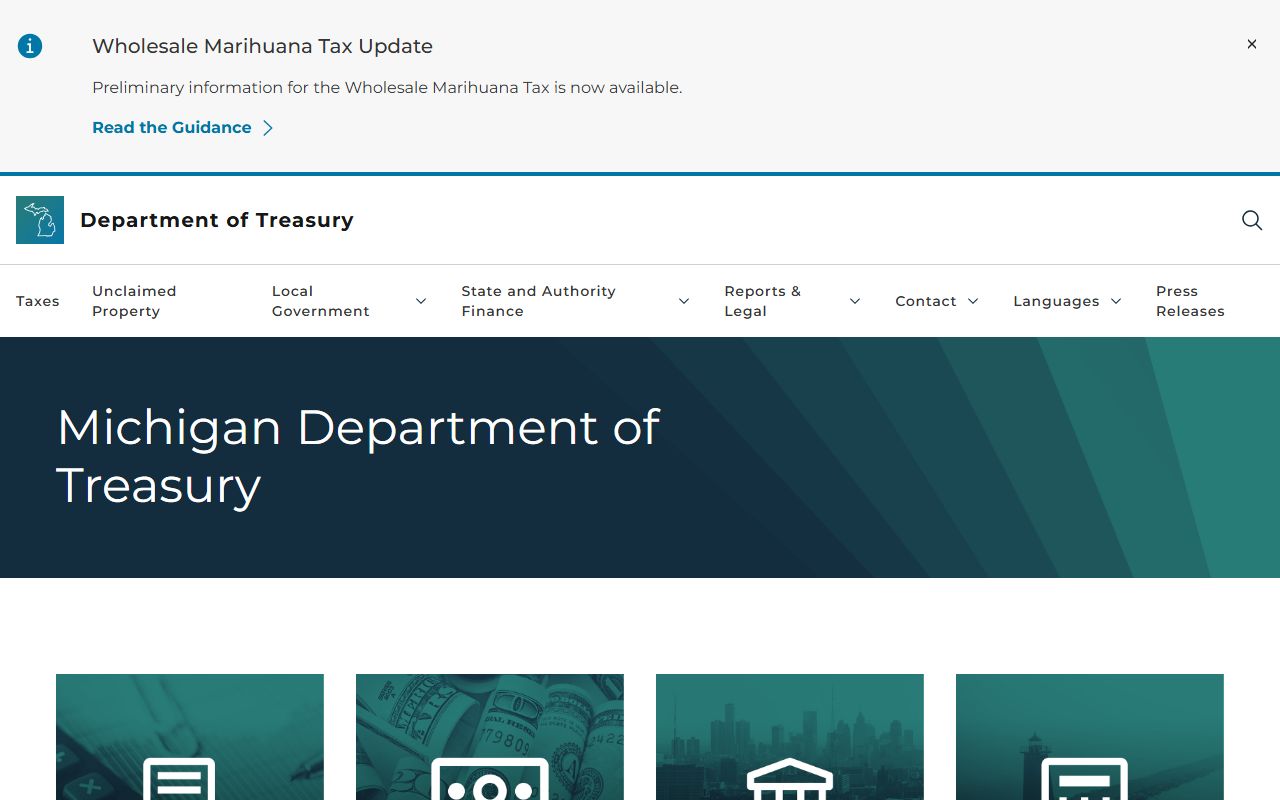
The Treasury site covers property tax topics relevant to all Michigan counties including Calhoun.
UCC Filings and Related Calhoun County Records
UCC financing statements that cover fixtures attached to real property may be filed at either the county level or with the state. The Michigan Department of Licensing and Regulatory Affairs handles statewide UCC filings. You can reach LARA at 517-322-1144 for questions about UCC searches and filings.
Fixture filings that relate to specific parcels in Calhoun County get recorded at the Register of Deeds office along with other land instruments. These filings show up in the grantor-grantee index required under MCL 565.28. A complete title search should include a check for fixture filings, not just deeds and mortgages.
The Michigan Compiled Laws are available through Justia's Michigan code repository. You can look up the full text of any statute cited on this page. The legislature's own site also hosts current statute text but the Justia version is often easier to search.
Note: Document retention rules under MCL 399.811 require that deeds, mortgages, and plats be kept permanently. Tax records must be kept for at least 7 years. Building permits must be kept for the life of the structure plus 10 years.
Cities in Calhoun County
No cities in Calhoun County meet the population threshold for a dedicated city page. Marshall serves as the county seat. Battle Creek is the largest city in the county. Neither city currently has a separate property records page on this site.
Nearby Counties
Calhoun County borders six other counties. Each has its own Register of Deeds with separate records.